Tell us about the job
Takes about a minute. No obligation.
Before a contractor can quote a water heater replacement here, they have to look at the service panel. Electricity heats more occupied homes in Hawaii County, Hawaii than any other fuel, at 26.4% (2020-2024 ACS 5-year). An electric water heater draws a dedicated circuit, and a panel already committed to electric heating, cooling, and appliances can run out of capacity that is not visible from the outside of the house. If the existing breaker space cannot support the new unit, the electrical work becomes part of the job, which changes both the scope and what a homeowner is authorizing when they sign off on an install.
Electrical service is where water heater installation jobs here tend to slow down and cost more than a homeowner expected. Half the homes in Hawaii County, Hawaii were built in 1989 or earlier (2020-2024 ACS 5-year). Houses built around that period were wired for loads that predate today's water heating equipment, and the panel that was adequate then often is not adequate for what a contractor is bringing in now. A contractor quoting the job prices the panel first, because if it needs an upgrade, that work sets the schedule and the budget for everything else.
What a Water Heater Installation Covers
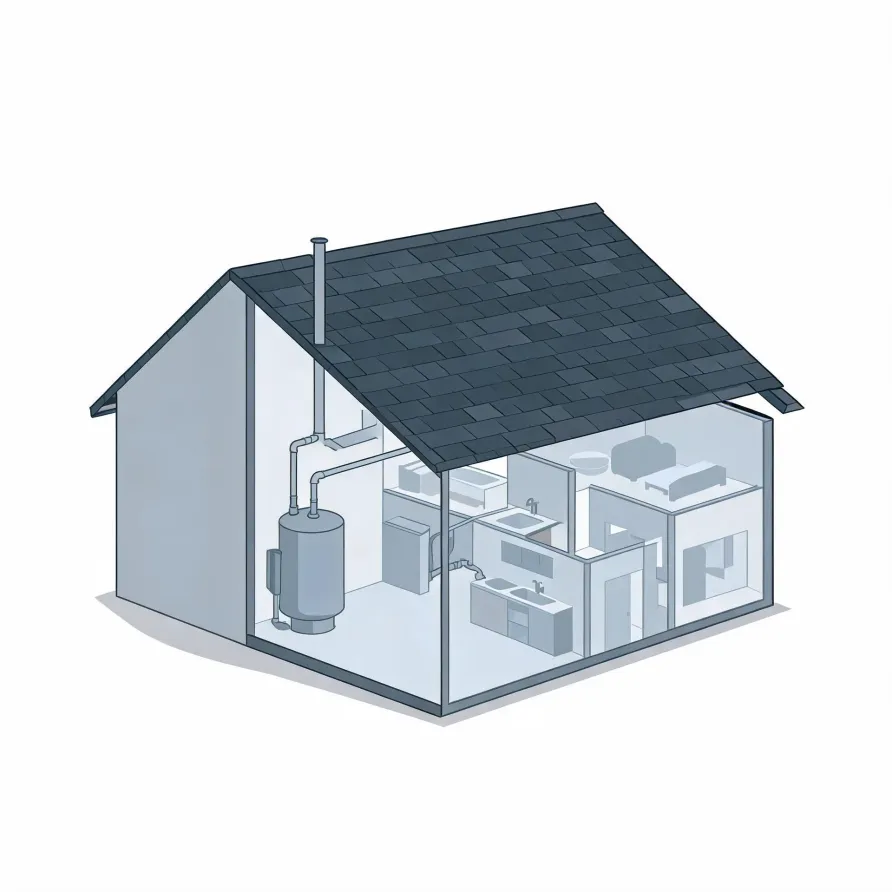
The tank or unit itself sits in a utility closet, basement, or garage and is the piece the contractor sets in place first. Attached to it are the cold-water inlet and hot-water outlet connections, which route supply water in and heated water out to the rest of the house.
The pressure relief valve mounts directly on the unit and opens if pressure inside climbs too high. The flue or exhaust vent runs from the top of the unit to an exterior wall or roof, carrying combustion gases out, and the drain pan sits beneath the unit to catch any water that escapes the connections.
The drawing shows a general layout of these components, and a licensed contractor determines exactly what applies to your home's configuration.
Find a contractor in Hawaii CountyHawaii County, by the numbers
92 severe weather events were recorded in Hawaii County, Hawaii between 2015 and 2024.
NOAA National Centers for Environmental Information, Storm Events Database, bulk CSV export, events 2015-01-01 through 2024-12-31.Half the homes in Hawaii County, Hawaii were built in 1989 or earlier (2020-2024 ACS 5-year).
U.S. Census Bureau, 2020-2024 American Community Survey 5-Year EstimatesHawaii County, Hawaii holds 90,735 housing units (2020-2024 ACS 5-year).
U.S. Census Bureau, 2020-2024 American Community Survey 5-Year EstimatesOwners occupy 74.0% of the occupied homes in Hawaii County, Hawaii (2020-2024 ACS 5-year).
U.S. Census Bureau, 2020-2024 American Community Survey 5-Year EstimatesSevere Weather in Hawaii County
Weather stress is one of the real variables in how hard a water heater works and how long it holds up. What happens outside in Hawaii County shapes what the equipment faces every day, which makes local conditions part of any honest installation conversation.
92 severe weather events, 2015–2024. Source: NOAA National Centers for Environmental Information, Storm Events Database.